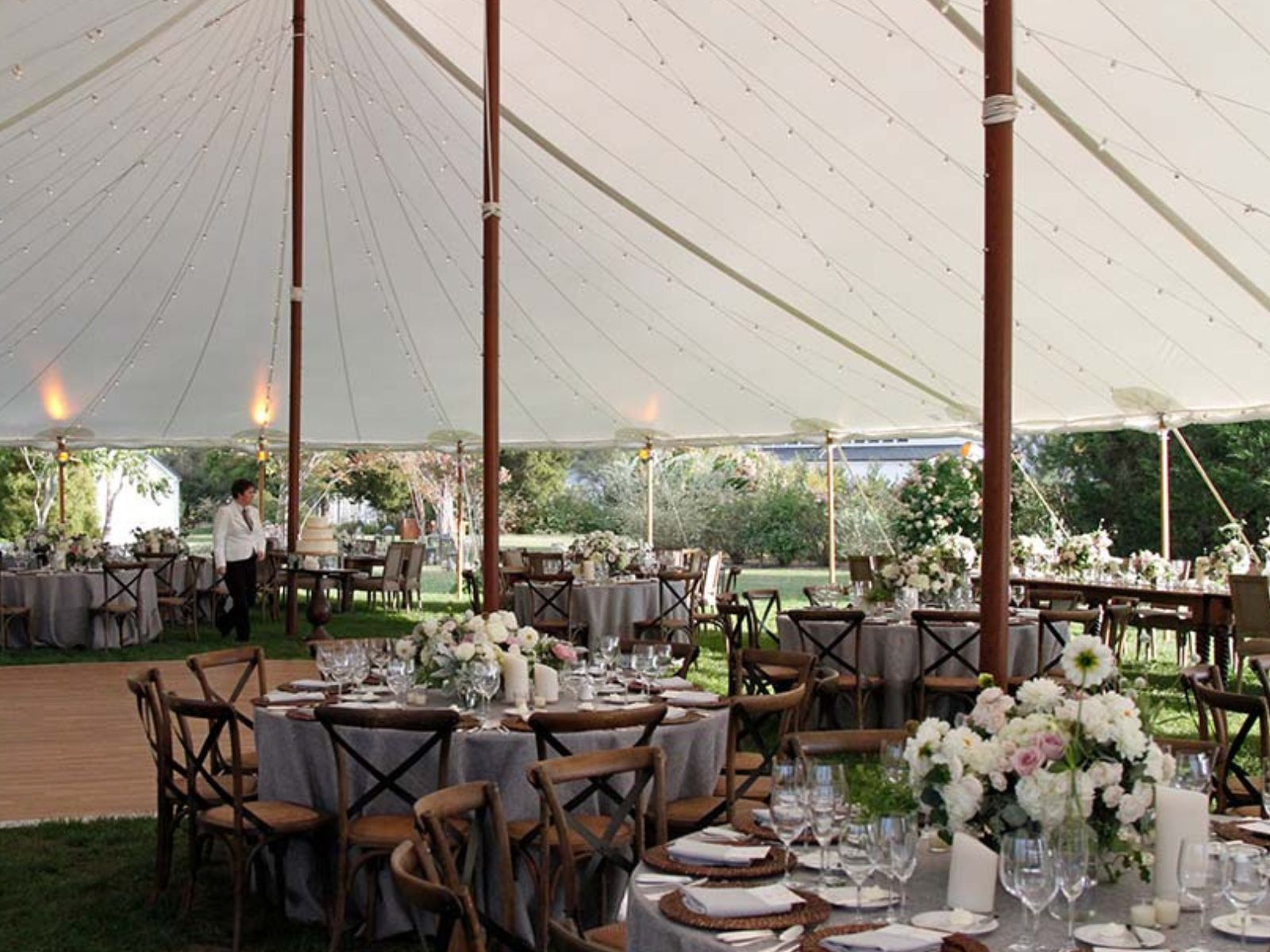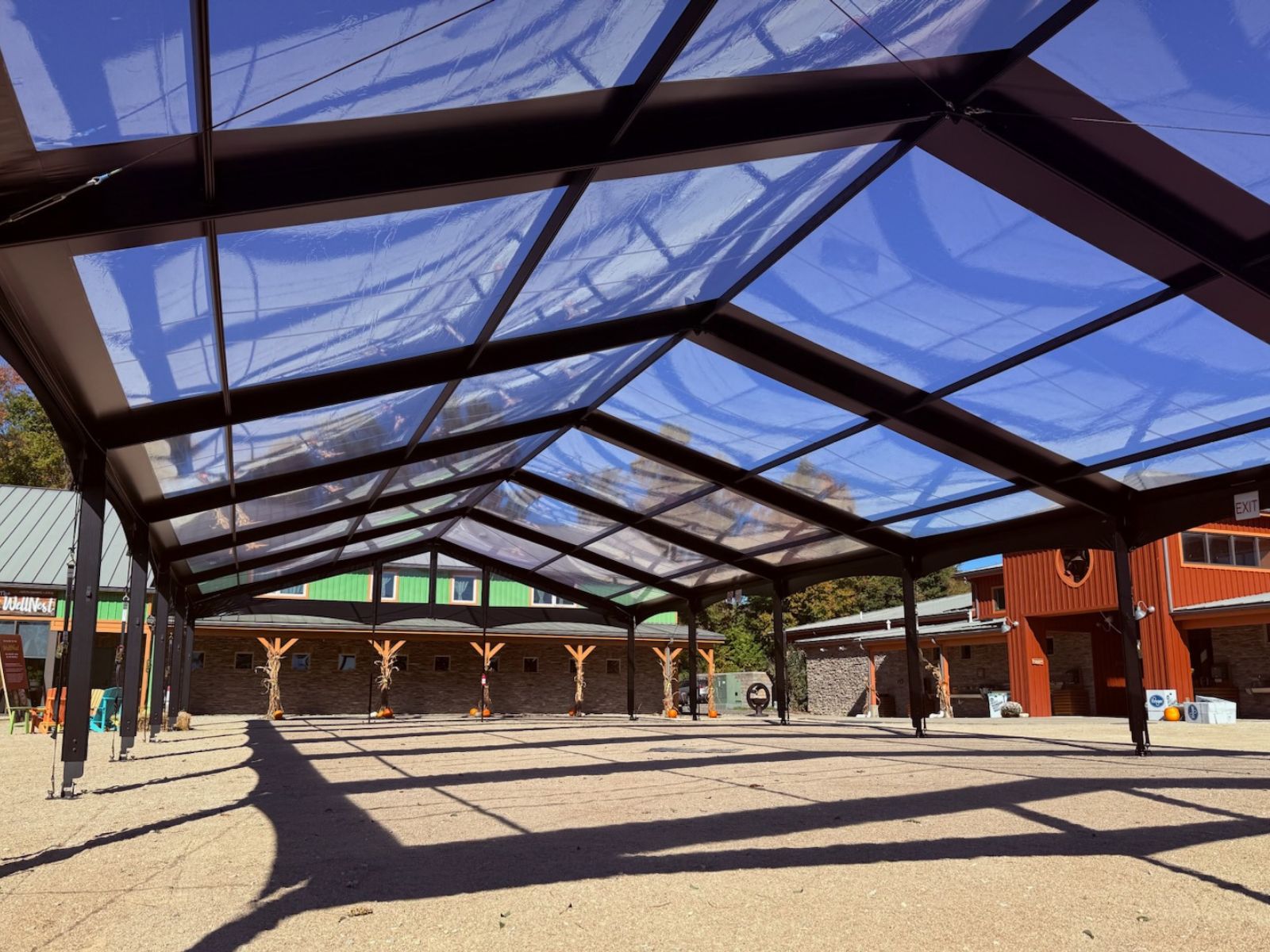
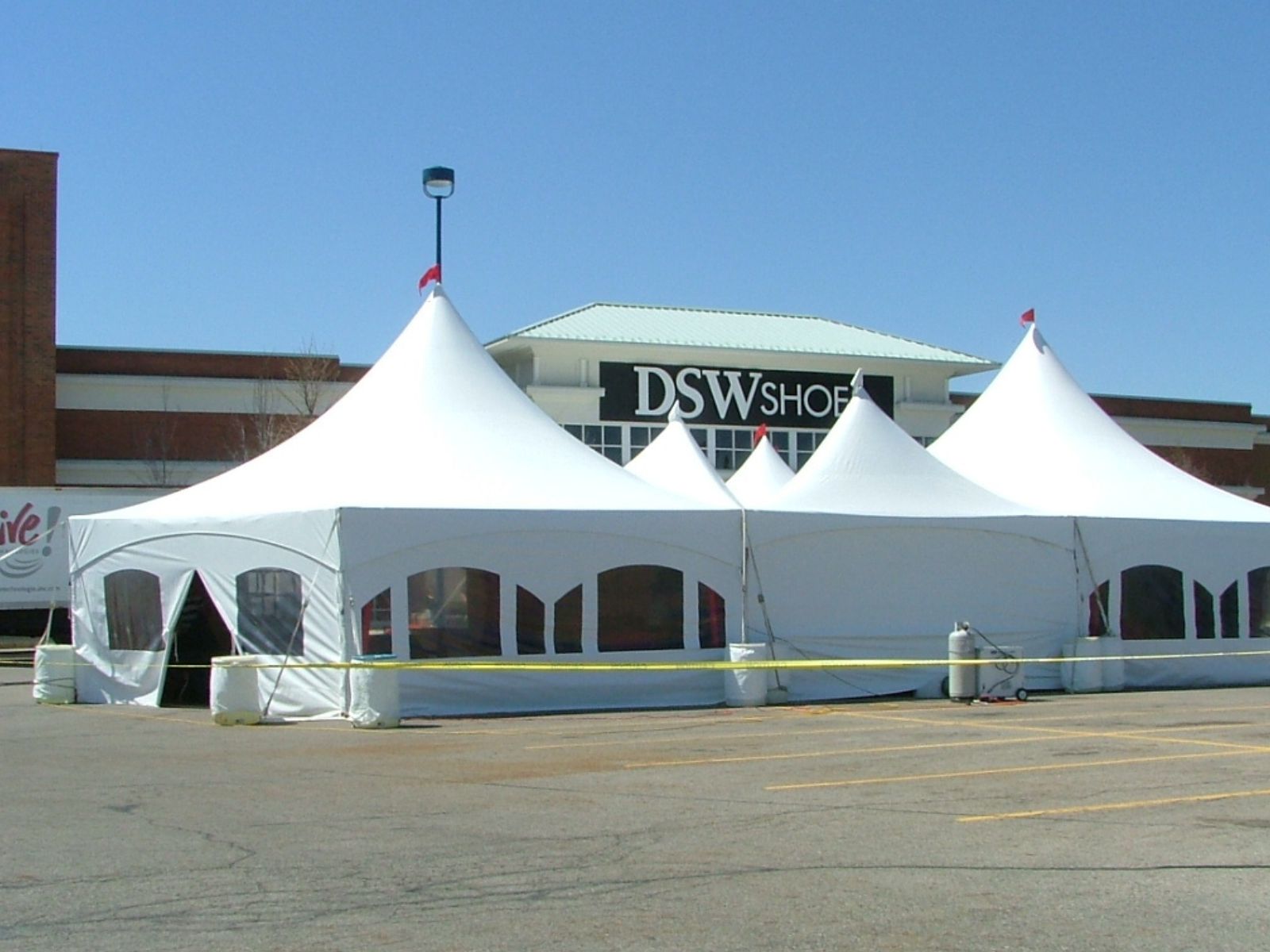
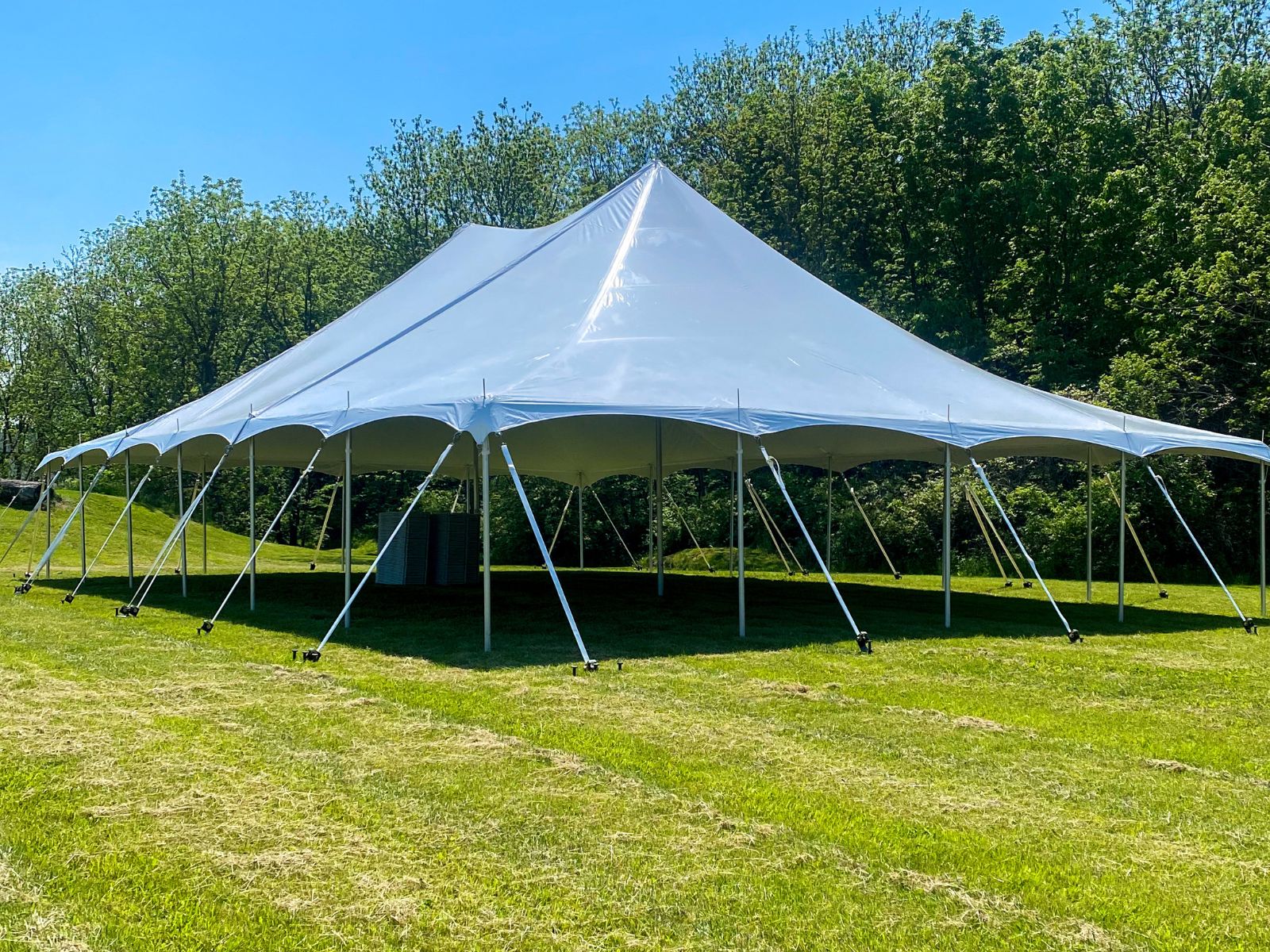
The main difference between a frame tent and a pole tent is how each is supported. A frame tent is built on a self-supporting metal skeleton with no interior poles, so it installs on almost any surface, including pavement and concrete, and leaves the space underneath completely open. A pole tent relies on center poles and stakes driven into soft ground, which creates its classic high peaks but requires stakeable earth and a little more room. Frame tents offer more placement flexibility; pole tents are often more economical at larger sizes.
Most people planning their first outdoor event assume a tent is a tent. Then they get into the details and discover the structure type shapes almost everything else: where it can go, how the inside feels, what it costs, and whether it suits a backyard graduation or a 500-guest festival. Here's how to choose.
What is the difference between a frame tent and a pole tent?
Frame tents are built on a self-supporting skeleton of aluminum or steel. No center poles, no interior obstructions, just open, usable space underneath. Because the frame carries the load, these tents don't need to be staked into soft ground, which means they can go almost anywhere.
Pole tents use center poles and perimeter staking to hold their shape, which creates those dramatic high peaks and sweeping lines. They're often the more economical choice at larger sizes, and they carry a classic, timeless look, but they need stakeable ground and a bit more room.
Which tent works best on my surface?
Surface and anchoring is usually the deciding factor. Frame tents install on virtually any surface, grass, gravel, asphalt, concrete, even decks, because they can be weighted rather than staked. Pole tents need softer ground they can be staked into. If your event is on a parking lot, a courtyard, or a tight hardscape footprint, that alone points you toward a frame.
Which tent gives you more usable space?
Frame tents give you a completely open interior, no poles to route tables, dance floors, or walkways around. Pole tents have center poles that become part of the layout, which many couples actually love for the drama they add, but which take planning around for tight configurations.
Which tent costs less?
Pole tents are often more economical, especially as sizes scale up. Frame tents carry a bit more cost for the added flexibility and surface versatility. The right call balances budget against where you're hosting and the look you're after.
Which ACC Rental tent fits my event?
Our catalog covers more structure types than most companies in Central Ohio, so the right fit is usually in stock:
- Black Frame Tent, Modern and clean. A strong choice for corporate events, upscale private functions, and festival vendor areas.
- High Peak Frame Tent, Freestanding with a peaked roofline, no center poles. Works on hard surfaces and tight footprints.
- Clearspan Tent, Wide, column-free spans. The go-to for festivals, trade shows, and large-scale events.
- High Peak Pole Tent, Classic dramatic peaks. A frequent pick for weddings and outdoor celebrations.
- Sailcloth Tent, Translucent fabric with a warm, elegant glow. One of the most requested wedding styles in Central Ohio.
Frequently Asked Questions
Are frame tents or pole tents better for weddings?Both work well. Pole and Sailcloth tents bring dramatic height and romance for open-lawn settings, while frame tents suit tight footprints, hard surfaces, and modern looks. The best choice depends on your venue's surface and the aesthetic you want.
Can a tent be set up on concrete or asphalt?Yes, but you'll need a frame tent. Frame tents can be weighted rather than staked, so they install on concrete, asphalt, and decks. Pole tents require ground they can be staked into.
What size tent do I need for my event?As a general guide, plan for roughly 10 to 12 square feet per seated guest, and add space for dance floors, bars, buffets, and staging. Share your guest count and we'll recommend a size.
Which tent is more affordable?Pole tents are typically more economical, especially at larger sizes. Frame tents cost a bit more but offer greater placement flexibility.
Start your project, we've done this before, and we know what you need.